Showing posts with label Sustainability. Show all posts

Wednesday, March 4, 2015

Wildlife Friendly Gardening for Natural Pest Control

Saturday, April 11th from 11 am to 1 pm 
Village Green Perennial Nursery
10223 26th Ave. SW
Seattle, WA 98146
 Join the Garden Hotline and Village Green Perennial Nursery for a workshop on Wildlife Friendly Gardening for Natural Pest Control!  $20 person
The beauty of songbirds, butterflies, and beneficial insects is ample reason to create a wildlife-friendly garden, but there’s so much more to the picture!  When you provide good habitat for birds and beneficial insects, they will in turn provide you with natural pest and weed control, increasing your garden’s health while decreasing your maintenance time. This workshop will teach you about the plants and design techniques that attract these delightful creatures to visit and live in your garden. We will also cover problematic wildlife and how to manage them in the garden. A Village Green Perennial Nursery garden tour and a chance to pick up some great wildlife friendly plants to take home for your own garden is included. Informational brochures will be available.

The Garden Hotline is managed by Seattle Tilth and sponsored by Seattle Public Utilities, the Local Hazardous Waste Management Program in King County, the Saving Water Partnership and Cascade Water Alliance and the RainWise program of Seattle and King County.


Thursday, February 20, 2014

Blacksmith workshop

 March 15 and 16  or March 29 and 30th (two classes per session )     11-2  hammer iron and learn to make some useful household items. return students can choose a project, perhaps window treatment or towel holder
IMG_6258 (640x427)1 child or adult $245 or  with a buddy  $460  ($230 each)
Sign up with a friend and save $15 ea.
             (please call or email to confirm)

Must sing a waiver. Village Green is not responsible for any injuries
IMG_20140105_135523  IMG_20140107_142357
8 and up is best, adults are welcome to sign up!

Very basic introduction to blacksmith. 
Skill level, beginner to intermediate. We'll make an easy project, an S hook and a plant hanger.
**Return students will make a  fire poker, towel bar or coat hook. I am not a knife maker. That requires special heat treating and annealing, however we can make the shapes if return student would like to try it.
IMG_20140107_123453 036
We'll hammer iron, learn proper posture and holding techniques, shop safety and more
I'll demo then you can try your 'arm and hammer'
Must wear canvas or denim pants, fitted cotton long sleeve shirt, wear layers. Flannel shirt, denim shirt, leather shoes. No synthetic materials. They can melt and burn skin.
Hair must be tied back. NO Fleece, no baggy clothes.
I would be willing to discuss the hourly rental of the studio with interested adults.
I have been a practicing blacksmith for over 15 years, taking classes from Scott Shattuck at the Duwamish trade center through SSCC, Continuing my education through weekend workshops with David Lisch, master damascus knife maker (I do not make knives,
we practiced other skills) and apprenticed for Shannon Buckner of 'Bent productions'
Vera 206-819-8544
10223 26th Ave SW Seattle Wa 98146 
Street parking. Shop is onsite at Village Green

Thursday, October 18, 2012

Fall is THE best time to fertilize with organics


           I get so many questions about 
 this topic, so here are some answers 

  Fall is THE best time to fertilize with organics. First of all, since they are slow release, they are slow to break down and so fall - with its attendant rains -starts the breakdown process.  BUT, due to cooler soil temps and lower N values, the plants don't needlessly convert the nutrients into excessive vegetative growth.  Instead, they plants start building up the storage pantry -- which is what will be needed for the spring flush, when reserves would otherwise be depleted.

Also, building up a robust root structure is what will help your plants prevent frost damage.  Our winters have been a bit whacky, but what has been a pattern is a few weeks of super cold weather. You need to freeze proof your plants.  A good fall fertilizing with Hendrikus Organics, which offers an ample supply of beneficial soil microbes will help in this process. Similarly, with all the rains the winter months will bring, a robust root structure will utilize the water better.  
                       
 Fall is also the time of year to amend soils and build the best soil structure.  Increase organic matter through compost -- and humate (HuMagic), and food sources that will feed both the plants and the microbes.  HO ferts contain at least 22 different species of beneficial microbes.  The microbes do much of the work in making nutrients available, but they also are the carpenters improving soils "architecture."  Increased pore space and aggregates of soil particles are necessary to drain te heavy rains. Otherwise, you will have soggy soil which can not breathe. The anaerobic conditions lead to death of beneficial microbes -- and root rot!  )= sick plants)
  
Lastly, fruit bearing plants such as blueberries are setting their fruitbuds now for next year. Fertilize now to get the best yield next year.  Similarly, the berries come out of the winter "starved."  A good fall fertilization will give them the nutrients they need to get producing more effectively during the growing season. 

Liquid HuMagic:  Stressed trees & shrubs.  Treat with soil drench all around the drip line.  Do a foliar leaf spray for Non-Conifers. (conifers breathe through their needles so we don't recommend spraying needles). The Humagic contains a mixture of benefical organic acids: Humic, Ulmic, and  Fulvic Acid.  The fulvic acid in particular, has a very low molecular weight -- which enables it to pass immediately through the cell wall where it immediately works to chelate minerals in forms useful to plants. The synergistic effect of the organic acids serves to improve metabolism, nutrient efficiency, and disease resistance. 

Japanese & Vine Maples have been particularly stressed by the long drought period.  While they are attractive now, in terms of their characteristic fall color, most maples are still a bit flacid and lack the vigor and pop they usually display. Perk them up and help them build up for winter stresses with applications of Liquid HuMagic:  They will respond quite happily to soil & foliar drenches.  Mix at rate of 2oz/gallon, apply every two weeks -- or for more immediate perk up and improved appearance, root enhancement and disease resistance.   The difference will be noted in leaf branch stem, vigor, and leaf thickness. Sometimes more intense color.

  Community supported, Supporting community

Sincerely,
Village Green Perennial Nursery

Friday, September 21, 2012

Perennials Sale

 As the summer comes to a close, and we begin the return to cooler temps, shorter days and and colorful changes that fall brings, we realize some plants are more sleepy than others...so...

           We're having a 'Sleeping beauty' sale. 
Spring bloomers, trees and shrubs will be so much more vigorous and floriferous in the spring if you plant in the Fall. 
  Why you ask?
 They are dormant.  Strong root development can take place over the winter, resulting in less spring maintenance/watering, and stronger healthier plants.

           The same things apply to Fall planting...
    The success of healthy, well developed plants is 
                              IN THE SOIL. 


Sleeping Beauties SALE 
50%off sleeping/resting plants
Sept 22nd-30th 

Perennials on sale 
Daylilies 
Dahlia's 
Foxtail lilies 
Hardy Geraniums 
Columbine 
Geum 
Hellebores 
Lady's mantle 
Iris 
Hosta's-going to sleep soon (excludes Guacamole) 
Taro 
Lilies 
Shasta daisies  
Carnation 
Monarda 
Daffodils 
Tulips 
Uvularia 
Filipendula 
Yarrow 
Alliums 
Veronica 
Eryngium 
Penstemon  
Bowles golden grass 
Scented geraniuims-houseplant or outside in summer 
Devil's club- a NW native
and more...

Shrubs on sale 
Indian Plum 
Ninebarks 
Barberry 
mystery azalea's 
Gooseberry 

Vines on sale 
(excludes hops and honeysuckle) 
All clematis 
Climbing hydrangeas  
and more... 

Select Roses on sale... 
York and lancaster (overstock sale) 
Complicata (os sale) 
Sissinghurst castle (os sale) 
Evangeline  
Everest Fragrance 
Cardinal Richelieu 
Margarets Rambler 
Golden Showers  
and more...
The only West Seattle source for Hendrikus Organic Fertilizer
and soil mycorhhyzza. Give your plants the right start.

Family owned and operated. 35 years in business.
Community supported.

Sincerely,
Vera Johnson
Village Green Perennial Nursery

Wednesday, September 19, 2012

Old/Antique Roses- why you should be growing them

   Growing Roses has an entirely different meaning to me than to many others and seems to scare new as well as some seasoned gardeners. It does not have to, and I'll tell you why.

  When I first moved here to the Village Green Perennial Nursery 9 years ago, Teresa Romedo had planted roses. A lot of Roses.  I'm not sure, but we probably have somewhere between 50-60 roses growing here on the property, and at least 15 varieties that we grow in containers for cuttings.

 To say I was intimidated would be an understatement. AND, many of them were not even tagged-so I had no clue how to maintain them, or take cuttings to grow them. I was fortunate enough to be introduced to an extremely knowledgeable rose expert, Calvin Creasey. This guy can literally ID any rose....he has been instrumental in ID'ing the roses planted at Washington Park Arboretum. Some very rare roses are growing there, if you have not been in awhile, I suggest a late June/July visit sometime, and look up, UP, way up. Many the roses grow high up the trees.

I started reading and studying....did you know that the term 'Old roses' means so much more than a rose that's been in a garden for many years?
By classification --  an Old or Antique Rose describes 'any class of rose's to be in existence before 1867'
These roses have deep roots in history.  Think about the types...Damask (from the Middle East), China rose (Asia) "At the end of the eighteenth century, as China Roses were prominently introduced to the West, there was a great revolution in the world of roses. The arrival of the China Roses changed the rose world profoundly. There are many poignant changes that occurred with the introduction of the China Roses. The oldest and most obvious, the Species rose". (as stated on China roses page)

REMEMBER OLD ROSES- do you remember ever driving along a country road and passing by an old farmhouse, obviously long ago abandoned, but yet the roses growing in the yard, along the fence or over the barn were in FULL BLOOM? That, was an Antique rose, no doubt. They survive the test of time, grow with the least care and attention, can go unpruned for years and years.
Did I mention fragrance-if you want fragrant flowers-antique roses offer the old fashioned rose fragrance that cannot be found anywhere else. Sweet, spicy, apple scent, some are even slightly lemon scented.
Old roses are also good for culinary uses, like simple syrups, cakes, teas, salads, and salad dressings, as well as ice cream and other magical recipes


Most antique roses bloom only once a year, this is not a hard fast rule, but a general rule of thumb.


Some varieties we grow are listed below

 Greast maidens blush

Madame Hardy 
 Ispahan


 Madame Zoetmans

 Mutabilis


 Yorka and Lancaster

 Plaisantier

 Complicata

 Grootendorst


 Yellow lady Banks

 Old Blush

 Autumn damask  


Old Garden Roses
Learn about Antique Rose Classes.
View Modern Roses and Rugosas
We grow our roses on their own roots.

Alba
Dating from Medieval times, Albas feature pastel colors with pale, green—grey foliage, seven leaves, and pointed, scimitar—shaped thorns. Most have superb fragrance.
Albas are spring—flowering, extremely cold—hardy, and disease—resistant. USDA Plant Hardiness Zones 3—9
Celestial—"Celeste" unknown origin—very ancient. Healthy, robust, superb. Beautiful shell pink flowers, semi-double. 6x4 tolerates light shade. Long red hips. Very
fragrant.
• Félicité Parmentier—Quartered blooms/soft pink, fully double, fading to white. Densely packed buds are held in high clusters which unfurl to richly scented full blooms
containing a green eye. Shrub to 4 ft. Very fragrant —1834
Great Maiden's Blush—Maiden's Blush (Cuisse de Nymph)—fifteenth century—the name of this rose was changed to 'Maiden's Blush' in Victorian times as the
'Thigh of Nymph' was considered a little risque. One of the most well known albas. Many a cottage garden has had this rose growing beside it for decades. It is
absolutely charcteristic of the group, with its graceful habit, soft coloring, long bloom period, and incomparable fragrance. This rose will eventually attain a size of 6
feet tall by 5 feet wide. Blooms are borne in clusters of 3 to 5, exuding one of the most refined scents of all roses. The bloom period, although occurring only once a
year, lasts for up to 6 weeks. 'Great Maiden's Blush' is considered to be one of the finest of all of the European once-blooming rose, and has been a standard in many
cottage gardens. It's great heath and carefree demeanor has ensured its popularity for centuries. pre 15th century. Very Fragrant.
Maiden's Blush—18th century—smaller version of Great Maiden's Blush—smaller flowers on larger shrub than GMB. (GMB has larger flowers—15th century) Very
Fragrant.

Bourbons
Popular in Victorian England, bourbons produce large, fragrant blooms on vigorous bushes. Many varieties repeat-flower. Probably a cross between a Damask and the old
China rose "old Blush" they have an upright growth, shark-fin shaped thorns, and old rose form.
Souvenir de la Malmaison—Bourbon—1843—Originally known as ‘Queen of Beauty and Fragrance’ this rose received its present name when one of the Grand
Dukes of Russia obtained a specimen from the gardens at Malmaison for the Imperial Garden in St. Petersburg. ‘Souvenir de la Malmaison’ produces large, flat,
quartered blossoms with petals of pale, almost flesh colored pink, and a delightful fragrance. The compact bush rarely grows more than three feet, seemingly
spending all its energy on blooming rather than growing. Very fragrant.
Zepherine Drouhin—Bourbon—Climber—pretty flowers produced in great quantities, very fragrant, deep cerise-carmine. Grows happily on north wall and may be
grown as a shrub or for hedges. Can withstand heavy pruning. Very good repeat bloomer. Thornless. 18-10ft. Very Fragrant. 1868 Bizot

China
The Chinese were probably hybridizing roses before the 10th century! China roses added the yellow gene to modern roses (giving us apricots, oranges, etc.)as well as the
"rebloom" gene. Brought to Europe in the mid-18th century, these low-growing shrubs produce clusters of small flowers ranging from white to pink to true scarlet, with a
spicy fragrance.
Old Blush—China rose, almost thornless. Flowers are pink, fading to silvery-pink and are produced almost continuously from summer to winter, delicious scent.
Tolerates part shade. To 15 ft. with support. (1789)
Mutabilis—China rose 1894 Single blooms open pale yellow, turning to pink, then dark pink. So wonderful with all the colors on the bush at one time! Looks like
butterflies have landed. A wonderful shrub in the perennial border- or a small climber. Very distinctive in color—may I say— Beautiful!
Damask
Brought to Europe by the Crusaders, these ancient roses have rich perfume. The tall, arching shrubs exhibit strong winter-hardiness. One of the oldest classes of roses,
these provided the basis for many of our modern hybrids. Zones 4-9
Autumn Damask (Orgy Rose)—Rosa Damascena Bifera- Quatre Saisons- very ancient rose which probably originated in the Middle East as a Hybrid between
R.gallica and R. moschata This is the oldest European rose to flower more than once, about every six weeks through till autumn. It is one of the most important
historic roses. The buds are distinguished by the elongated sepals of the Damask and the rose is at its loveliest when the buds are partially opened. This is a rose we
remember from old chintz and wallpaper. No garden that aspires to contain antiques should be without this rose. Very Fragrant.
Celsiana—Damask Prior to 1750 Surely it was this particular shade of pink that Aubrey was thinking of when he worte this description of reigning beauty some three
centuries ago: "The colour of her cheecks was just that of the Damask Rose, which is neither too hot nor too pale," The warm pink color of 'Celsiana' pales a little in
the sun, but the translucence of the slightly fluted petals makes the whole flower seem to glow. The exceptionally large semi-double blooms, often four inches across,
appear in such quantity during the long spring blooming season that they weigh down the canes and cause them to form arches of flowers. The open shrub is of
moderate height, winter hardy and disease free, and the fragrance is simply overwhelming.
Ispahan—Vigorous, upright, shrubby. Flowers fully double, cupped, warm pink, rich and heady scent, blooms over long periods in summer. Good for hedging, mixed
borders, and containers. prune to shape, and remove a portion of oldest wood after flower. 5'x4' zone 4-9, sun, regular water. Very fragrant. Very long bloom time.
No repeat bloom. (pre 1832)
Madame Hardy—1832 Damask Alba-very double white with green button eye. Very fragrant, with honey-like overtones.
York and Lancaster—a Damask known since 1551 which is easily recognized by its unstable flower colours, deep pink, very pale pink, or some combination of the
two, with occasional striping in petals. Easily confused with Rosa Mundi. Legend has it that the name came out of the War of the Roses. The house of York had a
white rose and the house of Lancaster had a red rose for their emblems. York and Lancaster, with its bicolor blooms, supposely represented the joining of the two
houses. Very Fragrant.

Gallicas
Possibly older than Damasks are the Gallicas. Short, compact plants with thin, prickly canes and highly perfumed flowers. Colors range from pale pink to dark purple. Plants
are spring-flowering and winter-hardy. Zones 4-10
Apothecary Rose—Rosa Gallica Officianalis—This is probably the oldest form of Gallica in cultivation, having been brought from Damascus to France by Thibaut Le
Chansonnier in the 13th century. It is shown in the famous altarpiece in Ghent Cathedral painted in about 1430. Notable for its culinary and medicinal value, useful in
crafts, and ability to control erosion on steep slopes. Spreading, suckering bush up to 5ft high. Deep reddish pink blooms mid-late summer. One Time bloom. Highly
disease resistant, prune out unwanted canes after flower. Very Fragrant.
Cardinal de Richelieu—Gorgeous double blooms, smokey purple- velvet texture. Fertilize and prune carefully. Laffay 1840. To 4 ft. Very fragrant.
Complicata—Very robust, reliable and free flowering variety with very large flowers of a brilliant, pure rose-pink and golden stamens. Excellent as shrub, or climbing
into in old trees. Light, fresh sweet scent. 5ft x 6ft or to 15ft as climber. Very disease resistant. One time bloomer- but a fantastic display lasting 6 weeks or more.
Unknown origin. Fragrant.
Sissinghurst Castle—An old Gallica found by Vita Sackville-West growing at Sissinghurst Castle in the ruins of the garden. It makes a mass of stems up to 4 ft high,
purplish-crimson flowers, mid to late June. Good for low hedge.

Hybrid Perpetual
An offshoot of Bourbons—can be pegged—very versatile in the garden. Popular in Victorian England, these roses bear repeat blooms of fragrant, full flowers on tall, upright
shrubs. Zones 5-10
Reines des Violettes—Hybrid Perpetual— Flat, well formed, medium-sized flowers with varying shades of lilac and purple petals. Almost thornless, dusky greyish
foliage. True Old Rose character. Repeats well. To 6ft. Fragrant. (Prior to 16th century)

Moss
Popular in Victorian England, these distinctive roses have fragrant, mosslike growth on the flower buds. They are available in a range of colors and flower forms. Some
repeat bloom. Zones 4—9
William Lobb—Semi-double, crimson in bud, dark dusky purplish-crimson fading to paler purplish lavender. June- One time bloomer. Well mossed on buds and
pedicels. (Laffay-1855) Pillar or climber. Very Fragrant.

Polyantha
These roses produce large sprays of blooms that fade to white as they age. These tough plants are relatively small shrubs, though in the right conditions they can grow
much larger than their European originals. Aside from their beauty, a major reason for their popularity is that they require little care. Even pruning is somewhat incidential -
just enough to deadhead and keep the plant where you want it.
Cecile Brunner—"Sweetheart Rose" pink clusters sprays, repeats. Small climber1881. Fragrant. NEW
Marie Pavie—fully double, pale pink to creamy white blooms in clusters almost all season. Almost thornless, shrub to 4 ft. 1888 light fragrance. Beautiful- always looks
great. NEW
• • Perle d'Or—is a highly fragrant little rose with buds that are similar to 'Cécile Brünner', so much so that it is often called 'Yellow Cécile Brünner.' The buds are a
shade of orange that resembles a fresh ripe apricot, and they open to a distinctive peaches and cream orange/gold blossom with silky petals that curl backwards to
form pom-poms. It repeats frequently and is seldom out of bloom. A vigorous growers and resisting most disease, "Perle d'Or' is a lightly branched shrub that can be
trained as a low climber. Very Fragrant. Jean-Baptiste Guillot - 1883 A very sweet rose. NEW

Portland
Compact, fragrant, and repeat-blooming, Portland roses are excellent in small gardens. Possibly a cross of Damask & Gallicas. Zones 4-9
Jacques Cartier—Old Rose—Portland-China hybrid. Rich pink flowers from summer to autumn. Blooms are fully double, sometimes showing a button eye at the
center, and the fragrance, to me, is quite strong and sweet. 4x3ft. (Moreau-Robert 1868)

Species
These are the original roses, growing wild in temperate climates, with characteristic flowers of five petals.
Rosa Glauca—(Rubrifolia/Species/Wild) Purplish gray leaves, small single bright pink blooms. Mostly gown for it's foliage, flowers a bonus. Summer flowering- 6-8 ft.
long bloom time. Great fall hips. Before 1850. Lightly fragrant.

Climbers
These varieties can be so vigorous they grow into treetops. Most are once- blooming, producing masses of vibrant blooms. Some are very fragrant (depending on variety)
and produce red-orange hips in fall.. Zones 5-9
Sombriel—Climbing tea—Very full and flat, creamy white (100 petals). Good repeat bloom. Strong tea fragrance 8-12ft 1850 very fragrant. NEW
Zepherine Drouhin— Bourbon— Climber—pretty flowers produced in great quantities, very fragrant, deep cerise-carmine. Grows happily on north wall and may be
grown as a shrub or for hedges. Can withstand heavy pruning. Very good repeat bloomer. Thornless. 18-10ft. Very Fragrant. 1868 Bizot

Ramblers
These varieties can be so vigorous they grow into treetops. Most are once- blooming, producing masses of vibrant blooms. Some are very fragrant (depending on variety)
and produce red-orange hips in fall. Zones 5-9
The Garland—Rambler, vigorous up to 16ft. but can be hard pruned to large bush. Small flowers in large clusters, pale creamy- salmon fading to white with a buff
yellow tinge. Very fragrant, an amazing display when flowering. Mid June bloom. May be grown into small trees with great effect. (Wells, 1835)


Vera Johnson BIO


My bio and community involvements...this is hard to do! 

About me...
 I'm a plant nerd. Really. 
I have a long story about how I came to Village Green, but will leave that for a blog post.

 I'm a spring born baby, an Earth sign, Taurus if you must know...  Growing plants keeps me grounded.  My mom had the GREENEST Thumb ever... and we consistently had roughly a million plants indoors and out- so I have been gardening all my life in one way or another. 

 I don't claim to know everything about plants or know all the Latin names, but I'm pretty good/intuitive with almost all things green and growing. 
   My way of learning has always been by way of doing. I've killed many a plant to get where I am. Some plants are just harder than others. Period. 
 What I hope to achieve here is teach others how to grow plants and have success AND FUN doing it. I want to encourage early/new gardeners to experiment, but also answer questions and trouble shoot about what, how and why things do and do not work. 
  So, I am here. 

 I want to be involved in my community. I want to educate and provide a place for students - therefore we host classes and workshops-taught by the many qualified educators we have around the Puget Sound.

We host
  • Rose experts (antique roses as well as modern)
  • Rain garden experts, Permaculture experts, Sustainable living experts, 
  • Urban Farmers, 
  • Organic gardening experts, 
  • Perennial experts, 
  • NW Natives experts,
  • Wildlife Restoration experts,
  • Beekeepers,
  • Foodies, 
  • Chefs...the list is endless- so we invite them to come and share their knowledge...and they do. 

 I love music, Art, wine, food and all things that are experienced and created through the use of our senses. 
 These things must be felt. 
I love my life.  I want to share these joys and pleasures.  We host live music in the garden throughout the summer and feature local artists to show their hand crafted items. 

  I am a resident and HUGE supporter of White Center. As a member of a community, I believe it is important to know my neighbors and fellow business owners.    I  want to participate in helping my neighborhood be even better than it already is, not just wait for it to happen. I have been a resident in West Seattle (multiple areas) for over 15 years and WC (DubSea) is my favorite neighborhood- hands down. 
 I work with the White Center Community Development Association every year to help with the WC spring clean up, leading groups of volunteers as well as making plant donations. I am involved with NHUAC, I am a member of the WC Chamber of Commerce, the Business owners association. I maintain a close connection to the White Center Sheriff deputy. I am my neighborhood Block watch captain and I occasionally write for the White Center Blog. 
   
  I work with many area schools to provide plants for Garden installations to attract wildlife, as well as many Donations for fundraisers including Community School of West Seattle, West Seattle Montessori, Alki Elementary, Schmidtz Park (funds raised for 2 of my custom sculptures was $4700)   I'm also a founding member of the Family learning center program at SWCC
 I am a homeschooling parent-over 8 years now, and as a homeschooling parent I want to teach my kids the impact we can have on our lives and the lives of others by simply showing up to do our part, but also by the choices we make and the huge impact they have on the lives of others as well. I am a very strong believer of sustainable living and supporting local businesses. That is why I make the choices I make about the plants I carry and grow. I make very effort to buy only from local independent growers. Smaller operations. Keeping the money local. Chain stores can drive little busineeses out very quickly if we aren't thoughful and intentional. 

 Organic is very, very important to me. I have very strong convictions/opinions about the use of pesticides and chemicals.
 I'll save that for another Blog post-but feel free to ask me sometime.
  I know the positive impact gardens can have on our environment, our health and well being and our food systems.
 I know the impact our choices make.
 I want to 'be part of the change I want to see...'


Tuesday, July 31, 2012

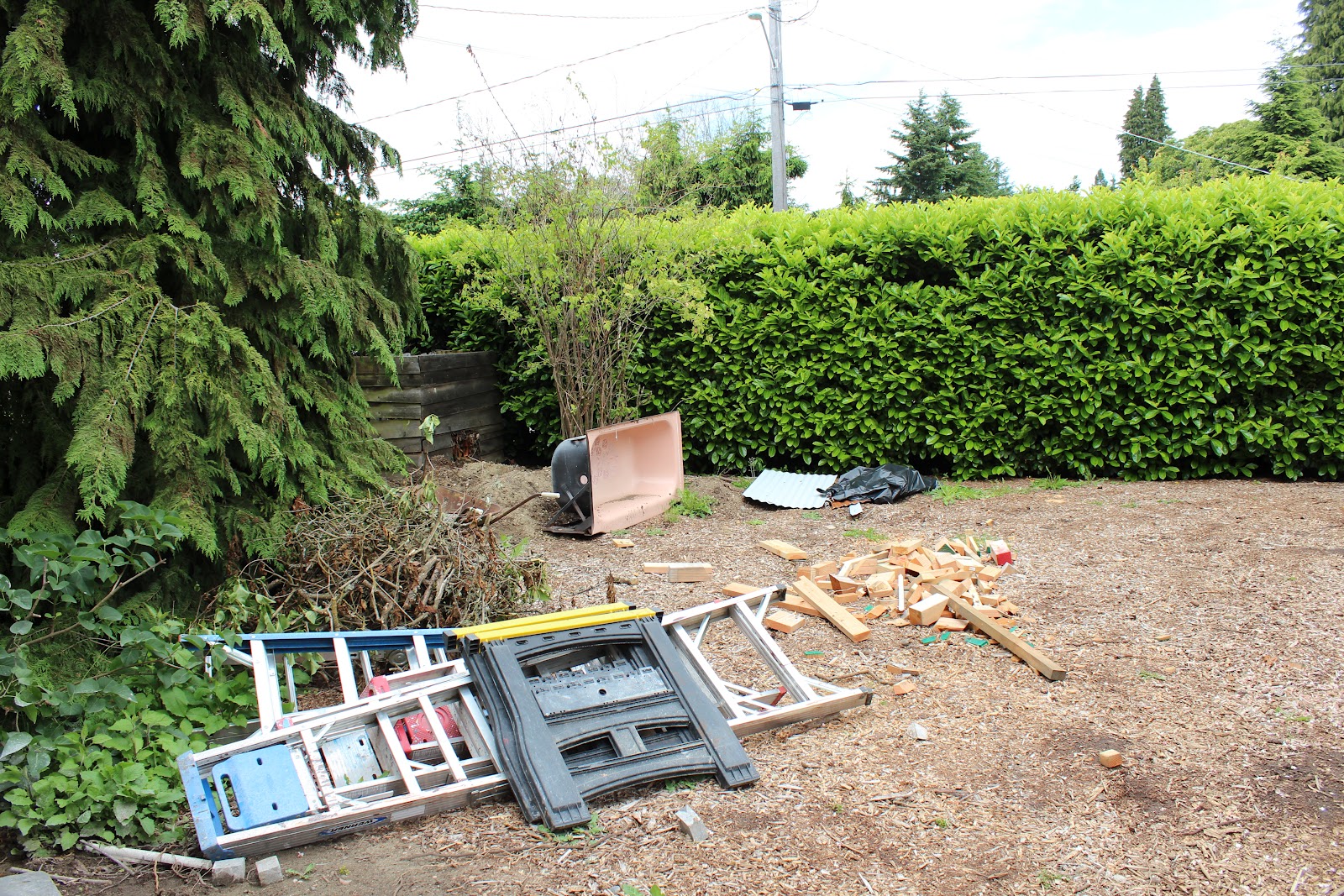
Garden makeover...rain gardens and woodlands

 I've been gardening most of my life...
and never do I tire of the endless creative possibilities.

  Gardens happen and develop over time. For me, it's a process and takes me from a concept, to actualized, as I do the work. There's a foundation of trust between myself and the client. We have to trust each other to work together.

  This time I'm invoved in a garden makeover with not just one, but two Rain gardens.
From the flat unexciting woodchipped "lawn" to luxurious backyard retreat.
    I just love it when the client has an idea and a vision-be it a huge 'pie in the sky' idea, or just a small 'please help me plant my flower garden' idea we can literally grow with.

This time the client and friend wanted an outdoor room, and a woodland garden.
Her contractor is a creative genious-and designed a spectacular secluded outdoor room with plenty of room for all sorts of artful adaptations, be it paintings, garden art or sculpture.

We had some basic ideas on paper, then with the help of an intern who is doing landscape design, we were able to build a design on sketchup and present the ideas to the client.
With a new building that will certainly be handling huge amounts of rainwater in the rainy seasons here in Seattle, I knew we needed to creat a rain garden or 2.
  The client likes fun and funky, so I suggested using rain chains  made from Recycled glass bottles from Bedrock industries that feed into a water way that would then feed into raingardens. We also discussed putting uplighting under the rain chains to accentuate the entrance since the rainchains flank the entrance to the outdoor room, as well as lighting the Magnolia and the maples to show off some of the garden at night.
More photos coming soon!


Tuesday, July 17, 2012

White Center Garden tour 2012

   I have never organized a community wide event before....and now I can say that I have.

I was asked to do so this year- 4 weeks ago, with no prior knowledge of how it works-literally no formula whatsoever...nothing indicating how this event takes place- I was asked to 'wing-it'
   I had an idea or two of my own...however I was so very grateful when the original coordinator and founder of the White Center Garden tour -Peggy Weiss- answered my email and request for assistance. I asked her to please share her ideas with me as to how she organized the event fot the first 14 years.  She was so excited to see it in my hands and was more than pleased to offer her suggestions-take it or leave it, and just share her knowledge with me. WHEW! Thank you Peggy!
  Who will participate, who wants to know about it, how do we get the advetising together...pay for posters, postcards, media press release and so on-how do these things work?
 I asked a team of extremely resourceful people to help me-and we pulled together a very fun event-according to all the wonderful feedback from the gardeners, tourees and the community.
That is what makes it all worth it.
White Center Garden tour photos by Ellen Cedergreen


  This years garden's-with the exception of one, were given 2 days to decide they would be on the tour, and 2 weeks to prepare. In typical garden tours-folks have about 3-6 months to prepare and aticipate the excitement...
 I feel extremely grateful to have a connection to so many gardeners and the pool of vast knowledge about so many different kinds of gardening techiniques-so we were able to offer the garden tour as an educational tool to tour goers as well as inspiration.  My goal with the garden tour is to offer people the opportunity to see the many styles and different systems that there are-none being better than the other.
 I like to gently remind folks that gardens are for all levels and all styles. Kids gardens all the way to manicured. Gardening is an experience to appeal to all the senses and every style should be recognized for it's own personal adaptations.
 I live in the most culturally diverse community...why not show off as many garden styles?
I hope you enjoyed the tour, and I hope it has inspired you to read about some new techniques and implement some in your own yards and gardens.
My hope here in White Center is to see more yards and lawns converted to gardens-so we can all enjoy the benefits and community aspect that happens naturally when you spend time out-of-doors connecting with the neighbors and friends made by sharing information and working together.
   That is what makes a community a neighborhood, or a neighborhood a community.

thank you for coming out to the Garden tour-and if you missed it this year-there's always next year.
Cheers
Vera