Showing posts with label Vegetable starts. Show all posts

Tuesday, February 18, 2014

Build your own planter box and grow your own food

$165 person all materials included
April 12th or 26th      10am-4pm    6 hr class
(2 separate classes) 8 students total each class

In this class we will measure, cut and assemble our own wooden planter boxes that we will then fill with soil, fertilizers and vegetable starts and discuss the many varieties of green and vegetables we can grow in this box, over the different seasons.

Included in the class

    ⁃    wood and nails to build 1 box per student
    ⁃    access to tools
    ⁃    1 bag and 1/2 of soil
    ⁃    fertilizers and worm castings (approximately 1 cup each)
    ⁃    up to 8 plant starts (2 packs) ranging from lettuce, kale, peas and spinach (availability)
    ⁃    1 pack of seeds for next planting, peas, lettuce, kale or spinach
    ⁃    discuss succession planting and timing and organics
pallet-wood-planter

PLEASE Bring eye protection, ear plugs and gloves if you have any or all of these items, it helps!
I have some to loan you, but it never hurts to have your own!

We will go over basic power tool safety and demonstrations. We will build our boxes together, taking turns on the chop saw, using drills and tools, helping each other along the way.
You will leave this class with a new confidence in using power tools, instructions on how to build this beautiful rustic planter, as well as your own handmade, planted container filled with seasonal greens to take home, nurture and harvest from, as well as a new group of friends to call upon to discuss the progress and planting with.
Bring your own lunch and water bottle.

Community building, connection and creativity. What more can you ask for?

Saturday, January 7, 2012

Sheet mulching/deep mulch


New Garden beds over existing lawn. Skill level...Easy.
Have you been wanting to start a garden in an area of your yard, but it feels too overwhelming and have no idea where to begin? Do you have too much lawn to mow? Want to get rid of some of it? Do you want to grow food and flowers? Growing perennial flowers is essential to healthy vegetable gardening, as the bees rely on the food source and the wasps that are attracted to the plants are a predator to many of the bugs that attack vegetable starts....more on that later! It's really quite easy, but it does take some effort. Are you in? Willing? Then let's go!! 
                                                                                   Gather materials...this can take time, and that's ok.
  •  Look around and see what you have to work with...rocks, concrete chunks from an old sidewalk or patio, wood rounds (preferably small diameter)
  • Cardboard with tape and staples removed
  • newspaper...no shiny pages, the chemicals in the inks are not what we want for the gardens.
  • Fallen leaves-there should be plenty in the neighborhood, ask your neighbors-leaves (not all leaves are equal-see below) are a treasure trove of nutrients. You can also get free 
  • Wood chips from a tree service, call ahead and have a place ready where they can dump and you will get all the free mulch you can handle.
  • *fertilizers (organic) with high nitrogen, blood meal is great, bat guano, or fresh 
  • chicken manure if you have chickens-we're not planting right away, so there's no risk of burning the plant roots.
  • I also LOVE to use KELP in this procedure, the soil benefits are spectacular.


1. Choose your location (think big, don't limit yourself!) I like to use a garden hose to determine the border and have a visual aid for what the garden will look like.

2. Mow or weed whack the area you've chosen (very, very short...leave the clippings for extra nitrogen)

3. lay a heavy dose of nitrogen (fertilizer and or manures) over the entire area you are planning to use as a garden, this will heat up under the layers we are about to put on the new garden and be ready in spring...patience.

4. On the chosen area for the new gardens, lay out cardboard so that it overlaps, or newspaper in thick layers, also overlapping, to prevent weeds from pushing up through. You are laying the paper or cardboard over the existing mowed lawn, and over the fertilizers.

5. Water the paper or cardboard to keep it from flying away. This is the stage where you can start heaping on the raked leaves. Birch, maple, oak, alder are the best leaves for this project.
You can also pile on any small branches and wood chips,( not bark a mulch....which is not a useful garden product, as it repels water....don't get me started) You want the top layer to be at least 6 inches deep, more if possible. This will get the underground soil food web something to work on over the winter.
Come spring, you will be amazed at how loose and workable the ground is. You can expect to be able to stick the shovel in, right into the paper/cardboard dig a hole, add fertilizer, soil amendment and plant whatever you were planning to put in the garden.


Saturday, September 17, 2011

Fruit trees/berries

Columnar apple
Asian pear
Fig trees (dwarf- can be grown in a container)
Blueberries
Aronia Berry
Elderberries
Huckleberries- red
Evergreen hucks- blue
Gooseberries


Herbs...
Sage
Lovage
Valerian
Pineapple
Thyme
Oregano
Hyssop
Angelica

Fall vegetables plant now for fall/winter harvest....
kale
lettuce
onions
leeks
cabbage

Thursday, September 15, 2011

Hendrikus organic fertilizers

Hendrikus organic fertilizers
 
StartRight Organic Plant Starter

StartRight is a balanced combination of endo-ecto mycorrhizae in a bio-stimulant nutrient base to assist new plants and transplants in their development of root systems and new hair roots. The name "Mycorrhizae" is Greek for fungus roots and it describes the mutually beneficial symbioses between these soil fungi and plant roots. A teaspoon of healthy soil can contain several miles of mycorrhizal filaments that play a fundamental role in establishing and extending root systems, improving plant nutrient and water uptake, disease resistance and plant growth, while reducing transplant shock and drought stress. StartRight re-establishes these essential soil fungi for healthy plant development.

Organic fertilizers

Hendrikus fertilizers...
Organibloom....medicinal herbs LOVE this stuff!!!
Also...
HuMagic is a rich, dark, natural humate, mined from a sole organic deposit of carbon-rich humate from both vegetative & marine compounds. This sole mine produces one of the finest humates on the market, rich in active, available humic and fulvic acids, organic carbon & natural trace elements. Used regularly HuMagic decreases your need for fertilizers as it enhances your soil's beneficial biology and ability to uptake nutrients.

Humic substances are the backbone of organic matter in soils and play an important role in soil fertility.
Physically: they function to improve soil structure, workability, porosity, water holding capacity, cation and anion exchange.
Biologically: they enhance the activities of beneficial micro-organisms, stimulating their growth and proliferation; increase plant cell energy and accelerate cell division; stimulate plant enzymes; increase root system development; and aid in photosynthesis.
Chemically: they chelate beneficial inorganic plant nutrients, especially iron and phosphorus into a stable soluble form available to plants; protect plants from harmful elements by making them insoluble.
Nutritionally: they improve water uptake by plants; enhance uptake of phosphorus, potassium, calcium, magnesium and sulfur, benefitting micro-organisms that in turn benefit the plants. They act as catalysts for fertilizer to increase nutrition in plant tissues.

Time to fertilize for fall...
Organic vegetable starts are here!

Sunday, September 11, 2011

Fall gardening

Hellebores, 
Evergreen huckleberriess,
Red huckleberries, 
madronas, 
cattails,
Red flowering currant
Bunchberry
Wintergreen

plus- fall veggies and more...on the way

Saturday, September 10, 2011

Fall Vegetables

Organic fall veggies on the way
leeks
broccoli
cabbage
cauliflower
beets
swiss chard
lettuce- a few varieties
onions

Friday, July 1, 2011

Summer Sale! 25-50% off

  • Midwinter fire dogwood shrubs 25% off
  • Nw Native dogwoods 25% off
  • Euphorbia 25% off
  • Birch trees 50% off
  • Select roses $5.00
  • Many herbs and veggies 4/$5.00

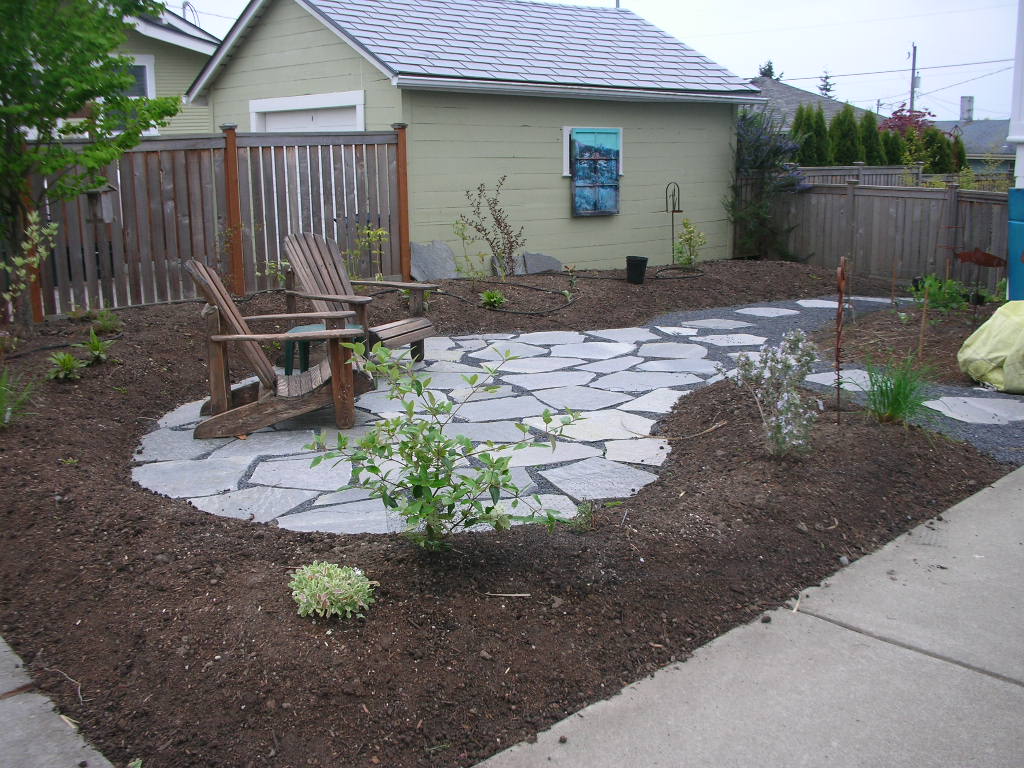
Garden install before and after photos


Village Green Perennial Nursery patio and bermed gardens for a happy West Seattle client.

Wednesday, June 8, 2011

Copper River Salmon with herbs

Copper River Salmon

mix together...
2 tbsp. olive oil,
3 lovage leaves,
1tbsp fresh hyssop,
basil,
1/2 tbsp fresh curley parsley
dash of salt pepper,
1/2 fresh squeezed lemon
marinate the fillet for 15mins

preheat over to 350
place the Salmon in a lighlty oiled glass baking dish and pour on the marinade
cover with a lid or tin foil and bake fro 20 mins
remove cover and bake a few more-until flaky and almost done.

Side dishes....
steamed garlic tops/spears
drizzled with butter and pinch of salt

Sauteed radishes 
1tbsp olive oil or butter
add any wild greens of your liking...
red veined dock,
kale,
parsley,
radish greens
purple mustard
sautee until crisp

Enjoy!

Friday, June 3, 2011

Salad and more salad

I wandered through the garden thinking I must simply look at the colorful leaves emerging, the beautiful textures, the heavenly sweet scent of so many different flowers and shrubs in bloom here, at my little slice of heaven here on earth...
Much to my surprise, my spinach leaves were resembling giant hosta leaves-the size of dinner plate!
Tthat proves it's been a few days since I'd visited this part of the yard! I grabbed a harvest basket and set to work gathering my soon to be lunch...


spinach
red-veined dock- a perennial leafy green
lettuce in every color
kale
parsley
purple wave GIANT mustard leaves- a beautiful plant!!!
mints in every flavor...
arugula
cilantro
viola flowers in bright jewel tones
hyssop
lovage
pineapple sage

I personally love to blend these flavors...it makes for an exciting salad-someof the flavors make you wake up and take notice!

I had a huge overflowing abundance of beautiful green goodness to eat-and share!

My strawberries and raspberries not being ripe yet...I purchased some organic ones...so in they went with the greens along with feta cheese, almons and raspberry vinagrette- delicious!

And there is plenty left for today!

Let me just say-the slad was stunningly beautiful! 

I paired this salad with another salad...
Avacado and mango tossed with lime, olive oil and cilantro
Delicious!

See you in the garden!

Friday, April 29, 2011

Honeybees arrive and in they go!

 Happy bee keeper! I am trying Carniolan bee's this year. I have not had good luck with Italian bees.
By the way-we have Local honey for sale

 This is how they arrive- in a crate with the queen in her own small crate inside-so they can adapt to her pheromone, and feed her.

 Literally 'shaking' the bees into the hive


 Watching all the bees load into the hive (see the box tilted)
 Checking to see if the Queen went down into the box-Success!!!  She did!
The blanket is to keep her from flying up and away -if we lose the queen-the whole colony will leave.

Thursday, April 28, 2011

Eating the Arugula

  We were lucky and got our cilantro, arugula, peas and lettuces planted weeks ago.
We are eating the leafy greens daily.
 I love the nutty flavor of arugula- and I tend to just pick it and eat it when I'm walking past. A very generous leafy green- it bolts in warm weather- I'm trying to be ok with the cold!!!

A perennial leafy green that I often suggest to gardeners is the Rumex or Bloody dock -just cut the flowers off-it will seed. This plant is very pretty, adds depth to wild greens salad, can be stir fried...use like chard.

Our peas are slower. BRRRR....I will be sowing a new crop soon to prolong the harvest.
Here in our climate we can plant peas until mid-June for long season harvests. My personal favorite's are the snow pea, but we all love peas!

If you haven't planted onions or garlic, do so now. For the garlic- I suggest starts at this point.

The soil conditions and the fertilizers are 90% of the success for high yield gardens. If you are starting  your garden this year (or last) with new soil- you are ahead of the game.
However, don't forget to amend the soil AGAIN.
Every time you plant, I strongly suggest you add homemade compost, worm castings, organic fertilizer
or water with compost tea- you will be amazed at the difference.

It is way too cold to even set out any tomato plants! If you've bought them somewhere, keep them indoors until the soil temps are at least 55-60 degrees.

Wednesday, April 27, 2011

Baby chicks

Americauna 

 We've had chickens for 7 years, and raised them form 2 days old...
so I'm no beginner,
HOWEVER... the current collection of baby chicks we are raising are so cute they make me squeel!
 Our chicken population has declined over the years...
old age, natural causes, very few predator problems...so we needed a new clutch to up the egg production. Have you ever tasted FRESH EGGS?
Seriously- there is no way to know until you KNOW the difference.
 We plan to keep 14 of the chicks. A mix, including Americaunas, Gold laced Wyandotte, Silver laced Wyandotte, Australorp, Barred Rock, Rhode Island red and Buff Orpington.

           For me, keeping chickens has been a natural addition to the garden. Whenever we weed the garden or nursery, practically all the weeds go to the chickens. They get so excited to see us walking towards the run. They know we have some exciting new treat for them to peck and scratch at- they are a busy bunch- they need fresh material.
    During the spring growing season I do not let them roam free-No No No! they will scratch up all my plants, eat the seedlings, and make a mess of things. I allow them to free range during the fall and winter and forage to their hearts content, but come spring...sorry gals, weeds and scraps for you till things are growing and well established...UNLESS I plan to watch them close, and then I let them out only for the last hour of sunlight. They will naturally go back to the coop to roost.
 Chickens are so amusing to watch. They have the funniest personalities, and can truly become a family pet. They will follow you if you around like a dog -we start them young, calling out to them when we approach them in the coop (I use the same sing song voice and repeat a phrase- like 'Hi Girls'), feeding them favorite treats, and sitting with them in the yard, resting.
 Isabella was one of those chickens- she was like a puppy. She follwed me everywhere-especially if i had food, or was digging in the soil-WORMS!
Isabella- family pet

We have 16 chicks to sell as pullets (3-6 month old chicks). Mixed breeds, as well as small moveable Coops and runs that house 5 hens, including laying boxes.

Stop in an ask us about chicken care- we are happy to share the knowledge.

Thursday, April 21, 2011

Dandelion pesto

Look at it this way...make friends -not enemies out of the free greens

Last weekend we collected and ate an entire salad out of wild harvested greens.
Greens collected...

dandelion
indian plum
oxalis
wash and toss is all together
I  like to add feta, slivered almonds and cranberries (my favorite is fresh strawberries)
my favorite salad dressing for this one is
balsamic vinegar and honey mixed to taste, with thyme, oregano and sage mixed in...
enjoy!

We also made pesto out of the dandelion greens
Dandelion greens,
 olive oil,
parmesan cheese
garlic
lemon juice
pine nuts
blend it all up in a food processor
I don't measure, I just go by taste and consistency
EASY!!
Eat it on pasta
with crackers and red peppers
use as sandwich spread
or any way you want!


Wednesday, April 13, 2011

Biochar farm stove workshop

Biochar farm stove workshop
Join SeaChar and the staff at West Seattle's Village Green Perennial Nursery for a very special  event.  Sat. May 21st,  10am -6pm,  at the Village Green Perennial Nursery
10223 26th Ave SW
Seattle Wa. 98146 

Biochar is charcoal created from dry organic waste materials. Amended to our soils it gives all of us a way to combat climate change by storing long lasting fixed carbon in our gardens or yards. Learn how to make your garden carbon negative and climate friendly, while building healthy soil.
  
For a $45 donation build and take home a five gallon "GARDEN MASTER Stove". This gardener's version of our "ESTUFA FINCA"  Central America cook-stove, makes clean heat and soil building biochar from your garden and yard wastes. All  tools and materials for building this stove will be provided.

* Along with building stoves, we will be learning about how biochar works and how to use biochar in the garden.

This will also be fund raiser for the "Farm Stove Project" . Learn how  this clean burning, biochar-making technology can build opportunities for woman, fight climate change and save lives and trees in the developing world.

* Bring a lunch, a pair of gloves and if possible a pair of safety glasses

* This will be a full day workshop. Everyone will have fun and everyone will be going home with a tested stove and an expanded understanding of biochar.  We will end the day by testing our new creations.
We are requesting a $25 materials deposit from those who wish to build a 5-gallon "GARDEN MASTER Stove" You can use our the PayPal button at our SeaChar.Org website: http://seachar.org/wordpress/?page_id=96

or mail checks to SeaChar.Org @ 603 Stewart Street, Suite 906 Seattle, Wa. 98101
Please RSVP! To: info@seachar.org or contact art.donnelly@seachar.org for more information and directions.

Come reinvent fire with us,

Art Donnelly206-612-3018
President SeaChar.Org
US Project Director, The Farm Stove Project


"SeaChar.Org...positive tools for carbon negative living"

Rain Gardens 101

Sat. April 30th, 10AM - 12:30PM
Rain Gardens 101
   Join Kimberly Leeper, owner of Mariposa Naturescapes (FB page), to learn what rain gardens are, why they're important for the health of Puget Sound, and steps to creating a successful one. They'll be a hands-on component where class participants determine if a rain garden will work on Village Green site. $30 person

Garden Art Summer Day Camp

Click on the form to print and mail with your check 

 Experience a whole new kind of Summer Art Camp! Not only will your children return home with beautiful handcrafted clay sculptures, miniature gardens, watercolor paintings, collages and sun-prints, they'll always remember spending three days in nature surrounded by trees, songbirds, chickens and flowers, inspired by the many colors, textures and sounds of Village Green.

Art and Gardening materials included. Please pack a lunch and plan for the weather.
 

Ages 8 - 12
Wednesday - Friday, 10:00 a.m. - 2:00 p.m.
Session 1: August 3 - 5
Session 2: August 17 - 19
$250

Bio for Sarah

 Teaching Artist Sarah Browning delights in painting and mixed media. Art teacher for Alki Community Center Pre-School, she has also taught art for the Alki Bathhouse Art Studio and the Children's Museum of Seattle. She graduated with a BA in Visual Arts from the University of California at Santa Cruz in 1998. When not making or teaching art, Sarah might be found at the library or walking in the park. Originally from Northern New Mexico, she lives in West Seattle with her husband, their daughter, and their pet rabbit. Visit her online at 
www.sarahbrowning.com.

Flexible Plan

Open with song, stretching, circle, demo. Lunch - includes some play time!
Day 1: Tour of grounds & studio. Wet clay sculpting - animal or fantasy sculpture. Collage and mixed media.
Day 2: Stain & Oxides on leathery sculptures. Painting with watercolor and/or mixed media.
Day 3: Wire Ornaments sculpting. Sun Prints. Assemble potted plant gardens. Give directions for ceramic sculpture pick-up.

This is a PRE-REGISTER camp
must pay 50% deposit to hold spot.
Cash or check. please make arrangements for payment by calling
206-767-7735