|
Thursday, October 18, 2012
Fall is THE best time to fertilize with organics


Monday, October 15, 2012
White Center Community Development Association live auction
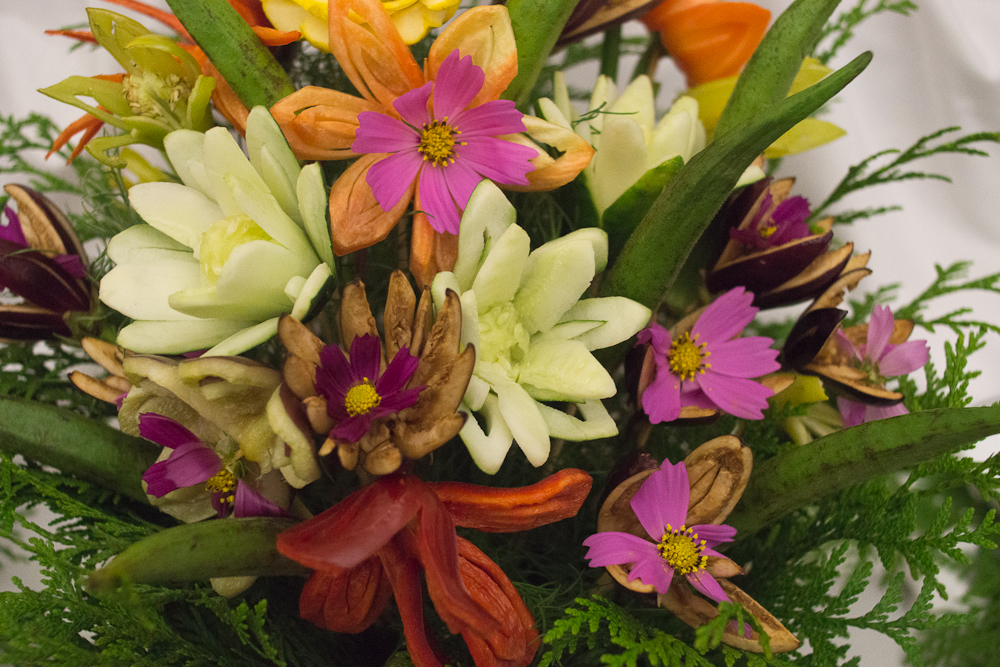
White Center Live Auction September 21st 2012
All photo taken by Mnerva labs




Sunday, September 23, 2012
'Keeping bees in towns and cities' by Luke Dixon
Today-I received a gift.
A book. Did I order this book? I have no memory of it...but my memory is getting worse...
Over a year ago I received and email from a gentleman inquiring about my bees and beekeeping.
I told him what I could and didn't know what to expect. He said he was writing a book. I felt honored to be asked about my experience...but here it is-in writing! We are in the book!
page 142.

What a pleasant surprise!
Author:
Thank you!
Saturday, September 22, 2012
Organic fertilizers and soil mycorrhizae
Organic Fertilizers
Ciscoe LOVES it!
Why use anything less than the best for your garden?
I have been gardening for years. For many years I mixed all my own fertilizers...I'd buy 50lb bags of fertilizer ingredients, lug them around and custom blend them-a tiring and dirty dusty job!
I was also mail ordering mycorrhizae to add to my soil blends to stimulate healthy root-soil development.
I was blending and bagging the fertilizer to sell to my customers...
TIME consuming!
BUT, this was the most important component to healthy plants...HEALTHY SOIL
Seriously, there must be a better way!
I started exploring the fertilizer options and came across Hendrikus organics
StartRight is a balanced combination of endo-ecto mycorrhizae in a bio-stimulant nutrient base to assist new plants and transplants in their development of root systems and new hair roots. The name "Mycorrhizae" is Greek for fungus roots and it describes the mutually beneficial symbioses between these soil fungi and plant roots. A teaspoon of healthy soil can contain several miles of mycorrhizal filaments that play a fundamental role in establishing and extending root systems, improving plant nutrient and water uptake, disease resistance and plant growth, while reducing transplant shock and drought stress. StartRight re-establishes these essential soil fungi for healthy plant development.
(Reprinted from Hendrikus website)
I now USE and sell EXCLUSIVELY the Hendrikus line.
For me-there has never been a better product, complete with clear instructions and nice packaging.
Ciscoe LOVES it!
Why use anything less than the best for your garden?
I have been gardening for years. For many years I mixed all my own fertilizers...I'd buy 50lb bags of fertilizer ingredients, lug them around and custom blend them-a tiring and dirty dusty job!
I was also mail ordering mycorrhizae to add to my soil blends to stimulate healthy root-soil development.
I was blending and bagging the fertilizer to sell to my customers...
TIME consuming!
BUT, this was the most important component to healthy plants...HEALTHY SOIL
Seriously, there must be a better way!
I started exploring the fertilizer options and came across Hendrikus organics

StartRight is a balanced combination of endo-ecto mycorrhizae in a bio-stimulant nutrient base to assist new plants and transplants in their development of root systems and new hair roots. The name "Mycorrhizae" is Greek for fungus roots and it describes the mutually beneficial symbioses between these soil fungi and plant roots. A teaspoon of healthy soil can contain several miles of mycorrhizal filaments that play a fundamental role in establishing and extending root systems, improving plant nutrient and water uptake, disease resistance and plant growth, while reducing transplant shock and drought stress. StartRight re-establishes these essential soil fungi for healthy plant development.
(Reprinted from Hendrikus website)
I now USE and sell EXCLUSIVELY the Hendrikus line.
For me-there has never been a better product, complete with clear instructions and nice packaging.
Friday, September 21, 2012
Perennials Sale
|


Wednesday, September 19, 2012
Old/Antique Roses- why you should be growing them
Growing Roses has an entirely different meaning to me than to many others and seems to scare new as well as some seasoned gardeners. It does not have to, and I'll tell you why.
When I first moved here to the Village Green Perennial Nursery 9 years ago, Teresa Romedo had planted roses. A lot of Roses. I'm not sure, but we probably have somewhere between 50-60 roses growing here on the property, and at least 15 varieties that we grow in containers for cuttings.

To say I was intimidated would be an understatement. AND, many of them were not even tagged-so I had no clue how to maintain them, or take cuttings to grow them. I was fortunate enough to be introduced to an extremely knowledgeable rose expert, Calvin Creasey. This guy can literally ID any rose....he has been instrumental in ID'ing the roses planted at Washington Park Arboretum. Some very rare roses are growing there, if you have not been in awhile, I suggest a late June/July visit sometime, and look up, UP, way up. Many the roses grow high up the trees.
I started reading and studying....did you know that the term 'Old roses' means so much more than a rose that's been in a garden for many years?
By classification -- an Old or Antique Rose describes 'any class of rose's to be in existence before 1867'
These roses have deep roots in history. Think about the types...Damask (from the Middle East), China rose (Asia) "At the end of the eighteenth century, as China Roses were prominently introduced to the West, there was a great revolution in the world of roses. The arrival of the China Roses changed the rose world profoundly. There are many poignant changes that occurred with the introduction of the China Roses. The oldest and most obvious, the Species rose". (as stated on China roses page)
REMEMBER OLD ROSES- do you remember ever driving along a country road and passing by an old farmhouse, obviously long ago abandoned, but yet the roses growing in the yard, along the fence or over the barn were in FULL BLOOM? That, was an Antique rose, no doubt. They survive the test of time, grow with the least care and attention, can go unpruned for years and years.
Did I mention fragrance-if you want fragrant flowers-antique roses offer the old fashioned rose fragrance that cannot be found anywhere else. Sweet, spicy, apple scent, some are even slightly lemon scented.
Old roses are also good for culinary uses, like simple syrups, cakes, teas, salads, and salad dressings, as well as ice cream and other magical recipes
Most antique roses bloom only once a year, this is not a hard fast rule, but a general rule of thumb.
Some varieties we grow are listed below
 Greast maidens blush

 Madame Hardy
 Ispahan
 Madame Zoetmans
 Mutabilis

 Yorka and Lancaster
 Plaisantier
 Complicata
 Grootendorst

 Yellow lady Banks
 Old Blush
 Autumn damask
When I first moved here to the Village Green Perennial Nursery 9 years ago, Teresa Romedo had planted roses. A lot of Roses. I'm not sure, but we probably have somewhere between 50-60 roses growing here on the property, and at least 15 varieties that we grow in containers for cuttings.

To say I was intimidated would be an understatement. AND, many of them were not even tagged-so I had no clue how to maintain them, or take cuttings to grow them. I was fortunate enough to be introduced to an extremely knowledgeable rose expert, Calvin Creasey. This guy can literally ID any rose....he has been instrumental in ID'ing the roses planted at Washington Park Arboretum. Some very rare roses are growing there, if you have not been in awhile, I suggest a late June/July visit sometime, and look up, UP, way up. Many the roses grow high up the trees.
I started reading and studying....did you know that the term 'Old roses' means so much more than a rose that's been in a garden for many years?
By classification -- an Old or Antique Rose describes 'any class of rose's to be in existence before 1867'
These roses have deep roots in history. Think about the types...Damask (from the Middle East), China rose (Asia) "At the end of the eighteenth century, as China Roses were prominently introduced to the West, there was a great revolution in the world of roses. The arrival of the China Roses changed the rose world profoundly. There are many poignant changes that occurred with the introduction of the China Roses. The oldest and most obvious, the Species rose". (as stated on China roses page)
REMEMBER OLD ROSES- do you remember ever driving along a country road and passing by an old farmhouse, obviously long ago abandoned, but yet the roses growing in the yard, along the fence or over the barn were in FULL BLOOM? That, was an Antique rose, no doubt. They survive the test of time, grow with the least care and attention, can go unpruned for years and years.
Did I mention fragrance-if you want fragrant flowers-antique roses offer the old fashioned rose fragrance that cannot be found anywhere else. Sweet, spicy, apple scent, some are even slightly lemon scented.
Old roses are also good for culinary uses, like simple syrups, cakes, teas, salads, and salad dressings, as well as ice cream and other magical recipes
Most antique roses bloom only once a year, this is not a hard fast rule, but a general rule of thumb.
Some varieties we grow are listed below
 Greast maidens blush
 Madame Hardy
  Ispahan
 Madame Zoetmans
 Mutabilis
 Yorka and Lancaster
 Plaisantier
 Complicata
 Grootendorst
 Yellow lady Banks
 Old Blush
 Autumn damask
Old Garden Roses
Learn about Antique Rose Classes.
View Modern Roses and Rugosas
We grow our roses on their own roots.
Alba
Dating from Medieval times, Albas feature pastel colors with pale, green—grey foliage, seven leaves, and pointed, scimitar—shaped thorns. Most have superb fragrance.
Albas are spring—flowering, extremely cold—hardy, and disease—resistant. USDA Plant Hardiness Zones 3—9
• Celestial—"Celeste" unknown origin—very ancient. Healthy, robust, superb. Beautiful shell pink flowers, semi-double. 6x4 tolerates light shade. Long red hips. Very
fragrant.
• Félicité Parmentier—Quartered blooms/soft pink, fully double, fading to white. Densely packed buds are held in high clusters which unfurl to richly scented full blooms
containing a green eye. Shrub to 4 ft. Very fragrant —1834
• Great Maiden's Blush—Maiden's Blush (Cuisse de Nymph)—fifteenth century—the name of this rose was changed to 'Maiden's Blush' in Victorian times as the
'Thigh of Nymph' was considered a little risque. One of the most well known albas. Many a cottage garden has had this rose growing beside it for decades. It is
absolutely charcteristic of the group, with its graceful habit, soft coloring, long bloom period, and incomparable fragrance. This rose will eventually attain a size of 6
feet tall by 5 feet wide. Blooms are borne in clusters of 3 to 5, exuding one of the most refined scents of all roses. The bloom period, although occurring only once a
year, lasts for up to 6 weeks. 'Great Maiden's Blush' is considered to be one of the finest of all of the European once-blooming rose, and has been a standard in many
cottage gardens. It's great heath and carefree demeanor has ensured its popularity for centuries. pre 15th century. Very Fragrant.
• Maiden's Blush—18th century—smaller version of Great Maiden's Blush—smaller flowers on larger shrub than GMB. (GMB has larger flowers—15th century) Very
Fragrant.
Bourbons
Popular in Victorian England, bourbons produce large, fragrant blooms on vigorous bushes. Many varieties repeat-flower. Probably a cross between a Damask and the old
China rose "old Blush" they have an upright growth, shark-fin shaped thorns, and old rose form.
• Souvenir de la Malmaison—Bourbon—1843—Originally known as ‘Queen of Beauty and Fragrance’ this rose received its present name when one of the Grand
Dukes of Russia obtained a specimen from the gardens at Malmaison for the Imperial Garden in St. Petersburg. ‘Souvenir de la Malmaison’ produces large, flat,
quartered blossoms with petals of pale, almost flesh colored pink, and a delightful fragrance. The compact bush rarely grows more than three feet, seemingly
spending all its energy on blooming rather than growing. Very fragrant.
• Zepherine Drouhin—Bourbon—Climber—pretty flowers produced in great quantities, very fragrant, deep cerise-carmine. Grows happily on north wall and may be
grown as a shrub or for hedges. Can withstand heavy pruning. Very good repeat bloomer. Thornless. 18-10ft. Very Fragrant. 1868 Bizot
China
The Chinese were probably hybridizing roses before the 10th century! China roses added the yellow gene to modern roses (giving us apricots, oranges, etc.)as well as the
"rebloom" gene. Brought to Europe in the mid-18th century, these low-growing shrubs produce clusters of small flowers ranging from white to pink to true scarlet, with a
spicy fragrance.
• Old Blush—China rose, almost thornless. Flowers are pink, fading to silvery-pink and are produced almost continuously from summer to winter, delicious scent.
Tolerates part shade. To 15 ft. with support. (1789)
• Mutabilis—China rose 1894 Single blooms open pale yellow, turning to pink, then dark pink. So wonderful with all the colors on the bush at one time! Looks like
butterflies have landed. A wonderful shrub in the perennial border- or a small climber. Very distinctive in color—may I say— Beautiful!
•
•
Damask
Brought to Europe by the Crusaders, these ancient roses have rich perfume. The tall, arching shrubs exhibit strong winter-hardiness. One of the oldest classes of roses,
these provided the basis for many of our modern hybrids. Zones 4-9
• Autumn Damask (Orgy Rose)—Rosa Damascena Bifera- Quatre Saisons- very ancient rose which probably originated in the Middle East as a Hybrid between
R.gallica and R. moschata This is the oldest European rose to flower more than once, about every six weeks through till autumn. It is one of the most important
historic roses. The buds are distinguished by the elongated sepals of the Damask and the rose is at its loveliest when the buds are partially opened. This is a rose we
remember from old chintz and wallpaper. No garden that aspires to contain antiques should be without this rose. Very Fragrant.
• Celsiana—Damask Prior to 1750 Surely it was this particular shade of pink that Aubrey was thinking of when he worte this description of reigning beauty some three
centuries ago: "The colour of her cheecks was just that of the Damask Rose, which is neither too hot nor too pale," The warm pink color of 'Celsiana' pales a little in
the sun, but the translucence of the slightly fluted petals makes the whole flower seem to glow. The exceptionally large semi-double blooms, often four inches across,
appear in such quantity during the long spring blooming season that they weigh down the canes and cause them to form arches of flowers. The open shrub is of
moderate height, winter hardy and disease free, and the fragrance is simply overwhelming.
• Ispahan—Vigorous, upright, shrubby. Flowers fully double, cupped, warm pink, rich and heady scent, blooms over long periods in summer. Good for hedging, mixed
borders, and containers. prune to shape, and remove a portion of oldest wood after flower. 5'x4' zone 4-9, sun, regular water. Very fragrant. Very long bloom time.
No repeat bloom. (pre 1832)
• Madame Hardy—1832 Damask Alba-very double white with green button eye. Very fragrant, with honey-like overtones.
• York and Lancaster—a Damask known since 1551 which is easily recognized by its unstable flower colours, deep pink, very pale pink, or some combination of the
two, with occasional striping in petals. Easily confused with Rosa Mundi. Legend has it that the name came out of the War of the Roses. The house of York had a
white rose and the house of Lancaster had a red rose for their emblems. York and Lancaster, with its bicolor blooms, supposely represented the joining of the two
houses. Very Fragrant.
Gallicas
Possibly older than Damasks are the Gallicas. Short, compact plants with thin, prickly canes and highly perfumed flowers. Colors range from pale pink to dark purple. Plants
are spring-flowering and winter-hardy. Zones 4-10
• Apothecary Rose—Rosa Gallica Officianalis—This is probably the oldest form of Gallica in cultivation, having been brought from Damascus to France by Thibaut Le
Chansonnier in the 13th century. It is shown in the famous altarpiece in Ghent Cathedral painted in about 1430. Notable for its culinary and medicinal value, useful in
crafts, and ability to control erosion on steep slopes. Spreading, suckering bush up to 5ft high. Deep reddish pink blooms mid-late summer. One Time bloom. Highly
disease resistant, prune out unwanted canes after flower. Very Fragrant.
• Cardinal de Richelieu—Gorgeous double blooms, smokey purple- velvet texture. Fertilize and prune carefully. Laffay 1840. To 4 ft. Very fragrant.
• Complicata—Very robust, reliable and free flowering variety with very large flowers of a brilliant, pure rose-pink and golden stamens. Excellent as shrub, or climbing
into in old trees. Light, fresh sweet scent. 5ft x 6ft or to 15ft as climber. Very disease resistant. One time bloomer- but a fantastic display lasting 6 weeks or more.
Unknown origin. Fragrant.
• Sissinghurst Castle—An old Gallica found by Vita Sackville-West growing at Sissinghurst Castle in the ruins of the garden. It makes a mass of stems up to 4 ft high,
purplish-crimson flowers, mid to late June. Good for low hedge.
Hybrid Perpetual
An offshoot of Bourbons—can be pegged—very versatile in the garden. Popular in Victorian England, these roses bear repeat blooms of fragrant, full flowers on tall, upright
shrubs. Zones 5-10
• Reines des Violettes—Hybrid Perpetual— Flat, well formed, medium-sized flowers with varying shades of lilac and purple petals. Almost thornless, dusky greyish
foliage. True Old Rose character. Repeats well. To 6ft. Fragrant. (Prior to 16th century)
Moss
Popular in Victorian England, these distinctive roses have fragrant, mosslike growth on the flower buds. They are available in a range of colors and flower forms. Some
repeat bloom. Zones 4—9
• William Lobb—Semi-double, crimson in bud, dark dusky purplish-crimson fading to paler purplish lavender. June- One time bloomer. Well mossed on buds and
pedicels. (Laffay-1855) Pillar or climber. Very Fragrant.
Polyantha
These roses produce large sprays of blooms that fade to white as they age. These tough plants are relatively small shrubs, though in the right conditions they can grow
much larger than their European originals. Aside from their beauty, a major reason for their popularity is that they require little care. Even pruning is somewhat incidential -
just enough to deadhead and keep the plant where you want it.
• Cecile Brunner—"Sweetheart Rose" pink clusters sprays, repeats. Small climber1881. Fragrant. NEW
• Marie Pavie—fully double, pale pink to creamy white blooms in clusters almost all season. Almost thornless, shrub to 4 ft. 1888 light fragrance. Beautiful- always looks
great. NEW
•
• • Perle d'Or—is a highly fragrant little rose with buds that are similar to 'Cécile Brünner', so much so that it is often called 'Yellow Cécile Brünner.' The buds are a
shade of orange that resembles a fresh ripe apricot, and they open to a distinctive peaches and cream orange/gold blossom with silky petals that curl backwards to
form pom-poms. It repeats frequently and is seldom out of bloom. A vigorous growers and resisting most disease, "Perle d'Or' is a lightly branched shrub that can be
trained as a low climber. Very Fragrant. Jean-Baptiste Guillot - 1883 A very sweet rose. NEW
Portland
Compact, fragrant, and repeat-blooming, Portland roses are excellent in small gardens. Possibly a cross of Damask & Gallicas. Zones 4-9
• Jacques Cartier—Old Rose—Portland-China hybrid. Rich pink flowers from summer to autumn. Blooms are fully double, sometimes showing a button eye at the
center, and the fragrance, to me, is quite strong and sweet. 4x3ft. (Moreau-Robert 1868)
Species
These are the original roses, growing wild in temperate climates, with characteristic flowers of five petals.
• Rosa Glauca—(Rubrifolia/Species/Wild) Purplish gray leaves, small single bright pink blooms. Mostly gown for it's foliage, flowers a bonus. Summer flowering- 6-8 ft.
long bloom time. Great fall hips. Before 1850. Lightly fragrant.
Climbers
These varieties can be so vigorous they grow into treetops. Most are once- blooming, producing masses of vibrant blooms. Some are very fragrant (depending on variety)
and produce red-orange hips in fall.. Zones 5-9
• Sombriel—Climbing tea—Very full and flat, creamy white (100 petals). Good repeat bloom. Strong tea fragrance 8-12ft 1850 very fragrant. NEW
• Zepherine Drouhin— Bourbon— Climber—pretty flowers produced in great quantities, very fragrant, deep cerise-carmine. Grows happily on north wall and may be
grown as a shrub or for hedges. Can withstand heavy pruning. Very good repeat bloomer. Thornless. 18-10ft. Very Fragrant. 1868 Bizot
Ramblers
These varieties can be so vigorous they grow into treetops. Most are once- blooming, producing masses of vibrant blooms. Some are very fragrant (depending on variety)
and produce red-orange hips in fall. Zones 5-9
• The Garland—Rambler, vigorous up to 16ft. but can be hard pruned to large bush. Small flowers in large clusters, pale creamy- salmon fading to white with a buff
yellow tinge. Very fragrant, an amazing display when flowering. Mid June bloom. May be grown into small trees with great effect. (Wells, 1835)
Subscribe to:
Posts (Atom)